

The craft
Made by hand, turned by the body
Five steps, unchanged for generations. No machine touches the clay, and no thermometer watches the fire.
1
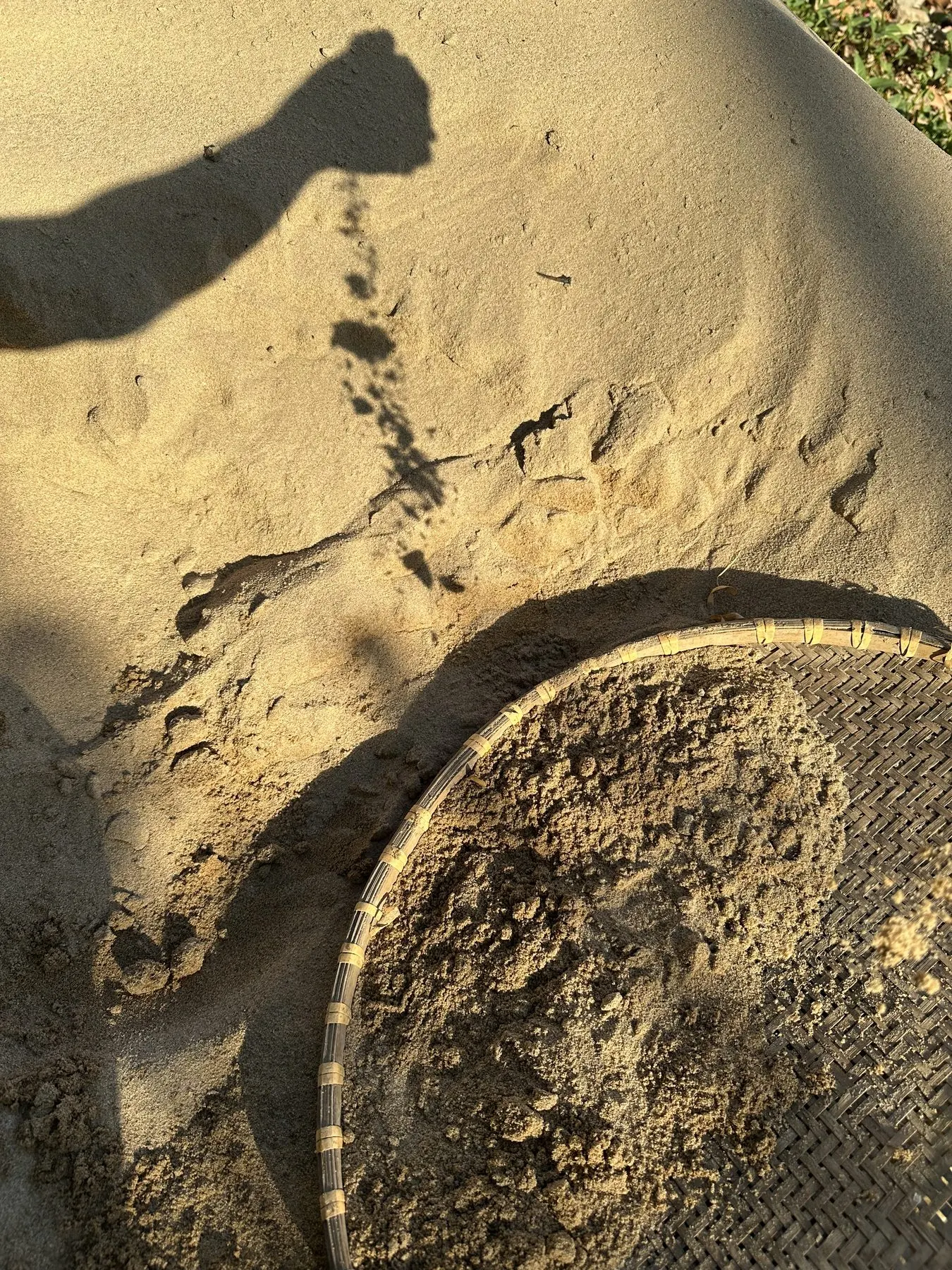
Preparing the clay
Halan clay is dried in the sun, broken down, soaked in water, then kneaded with fine sand in proportions each family keeps to itself.
2
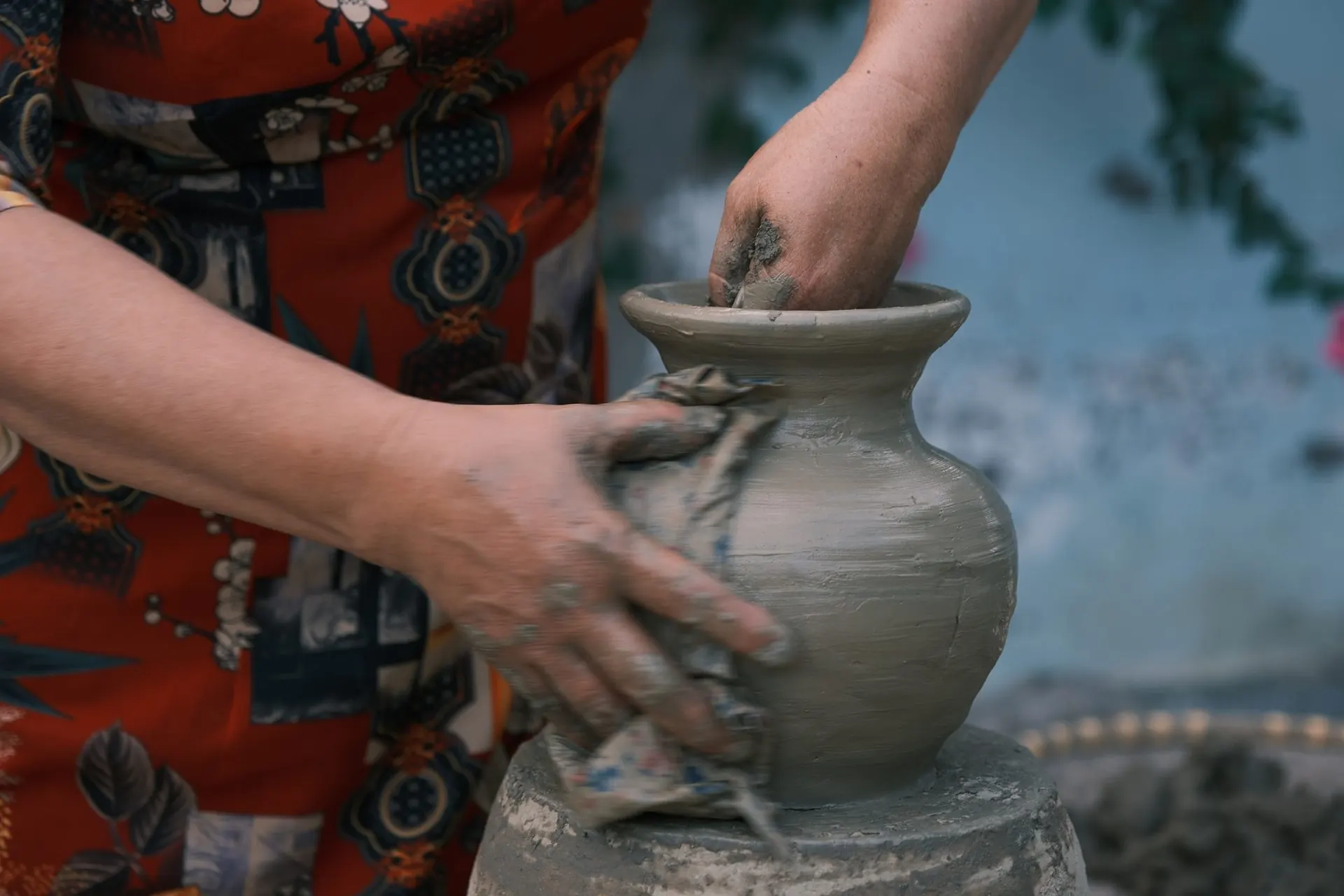
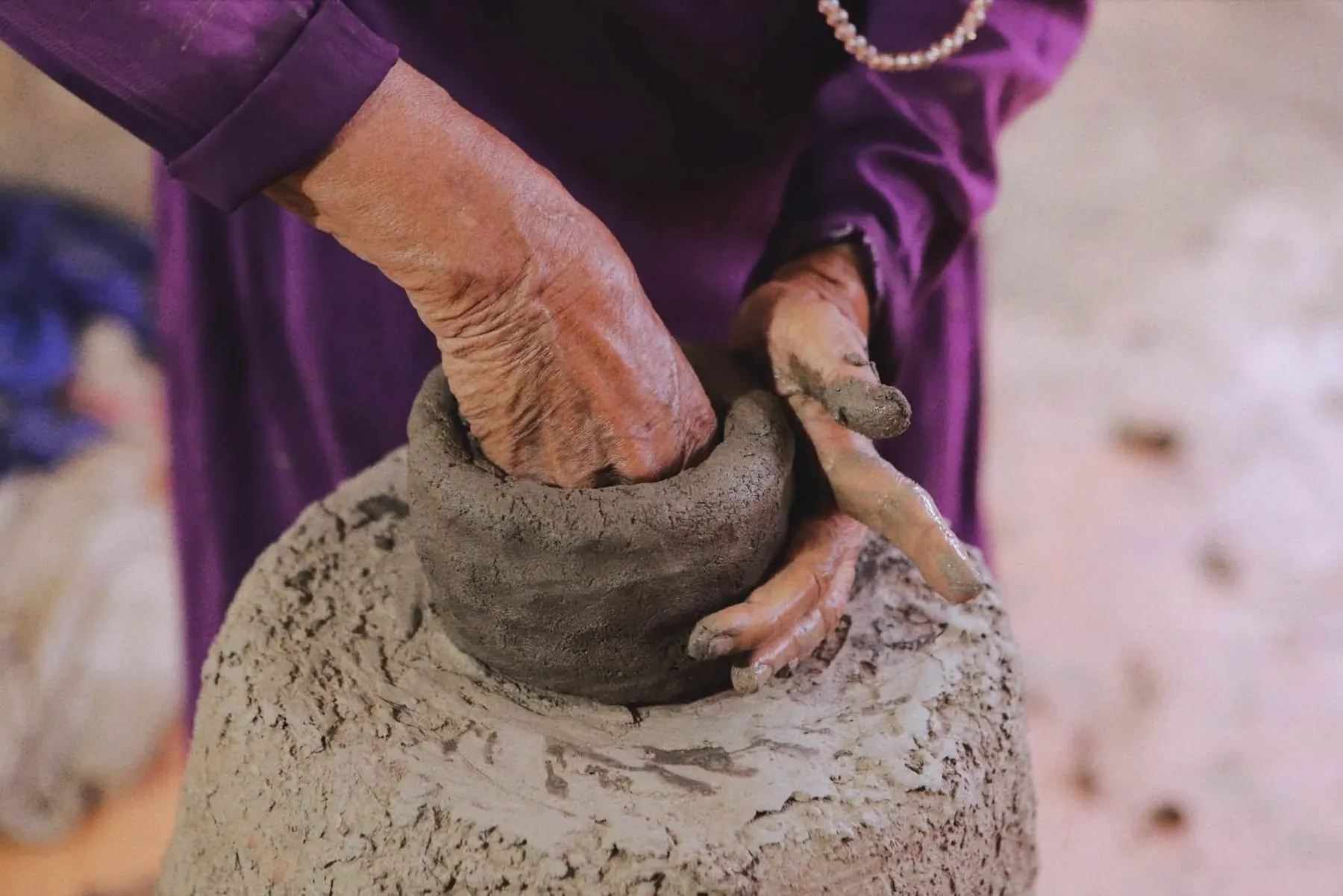
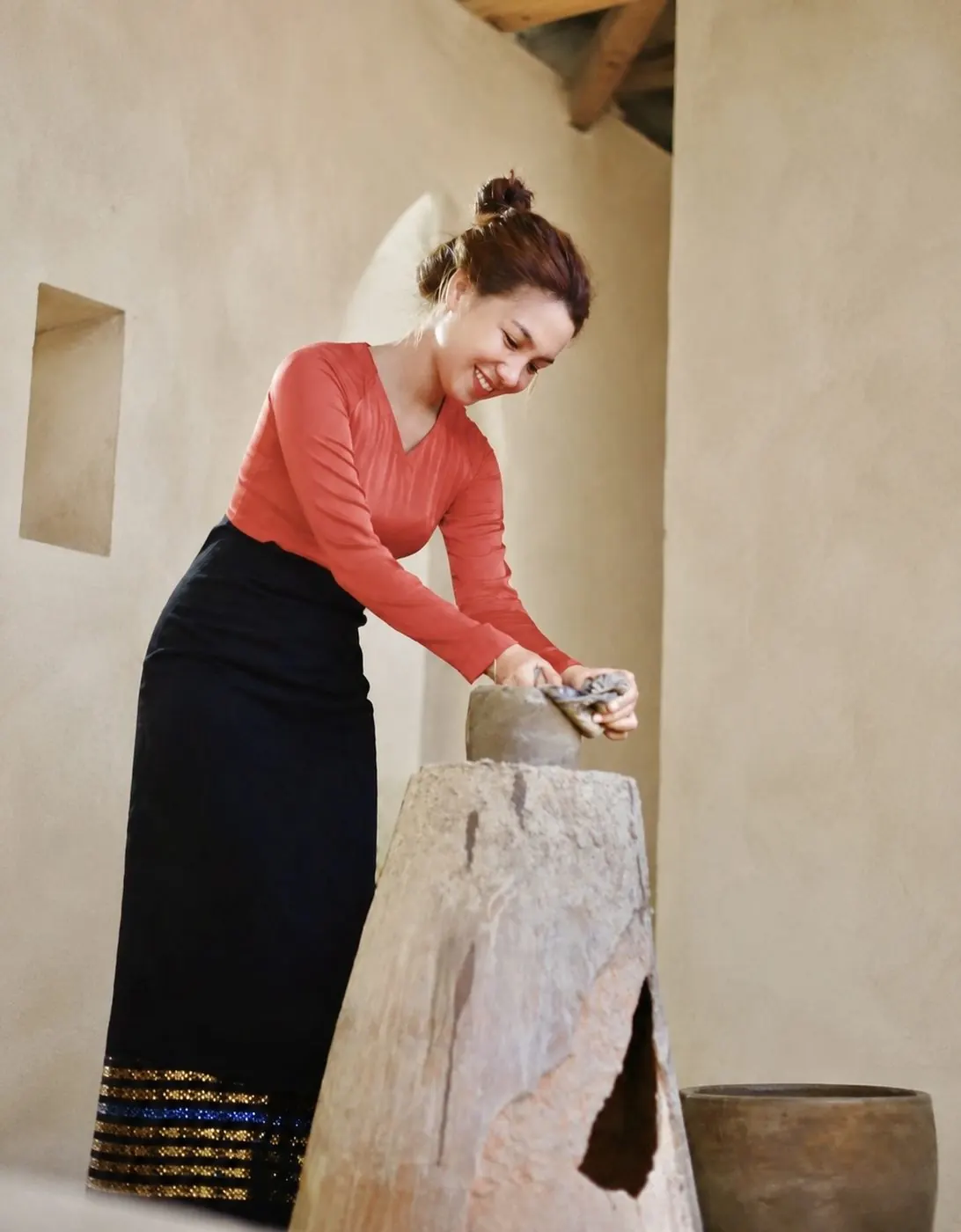
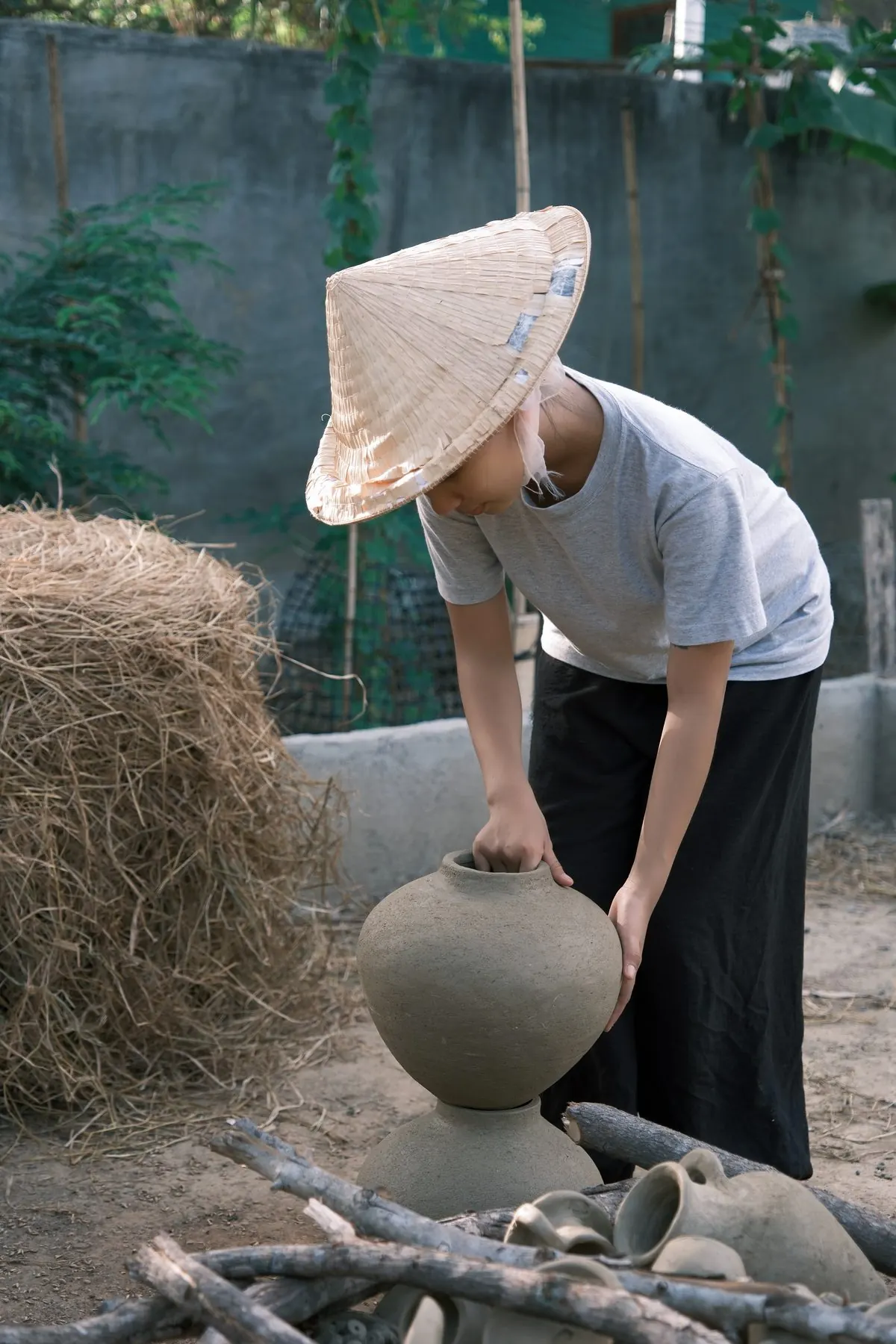
Shaping, turned by the body
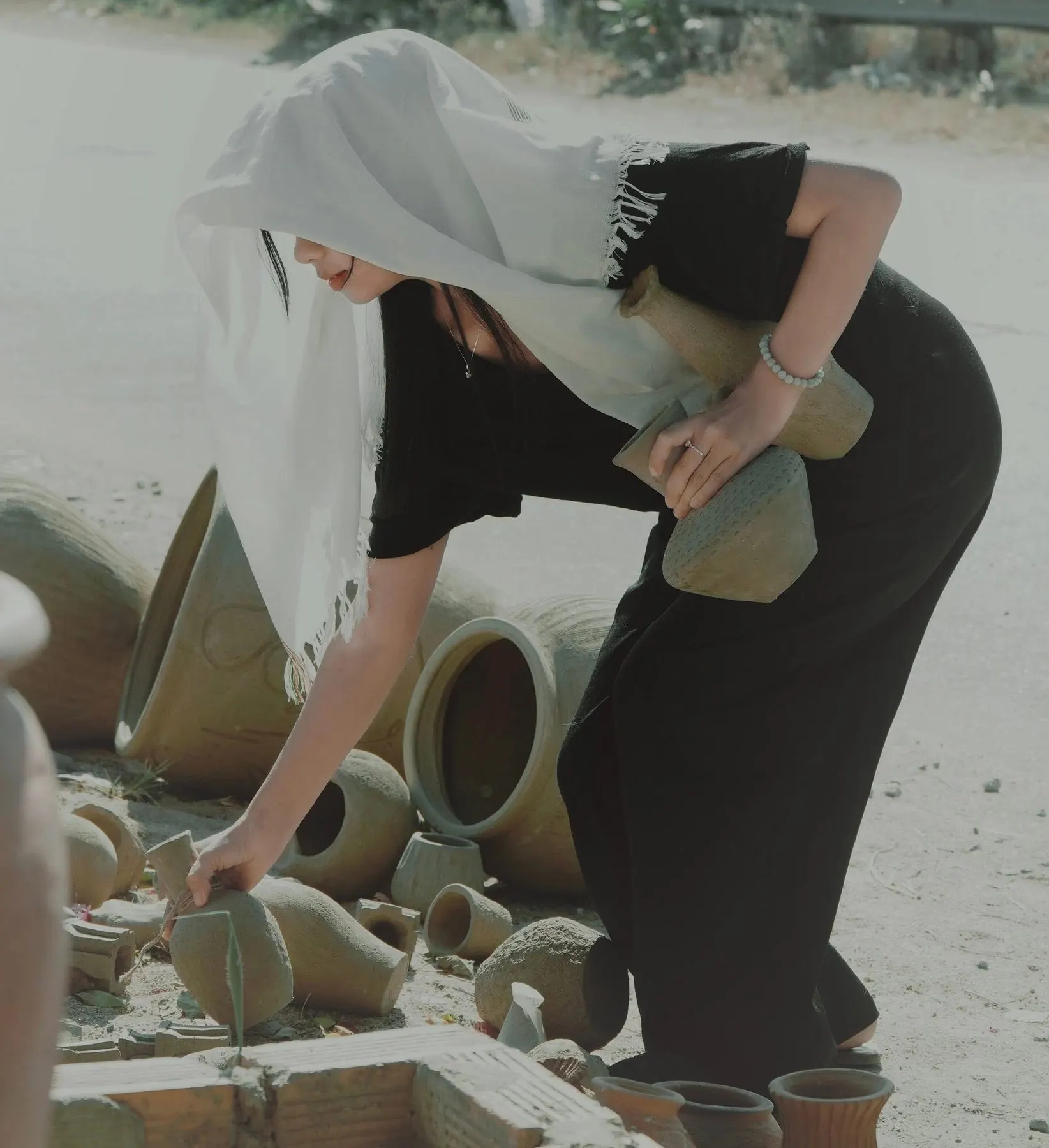
There is no electric or mechanical wheel. The potter keeps a fixed stand at the centre and walks backwards around it, smoothing, drawing up and shaping the clay with her hands. People here call it "made by hand, turned by the body".
3
Drying in the wind
Shaped pieces dry completely outdoors in the wind, kept out of harsh direct sun so the clay dries slowly and does not crack from sudden heat.
4
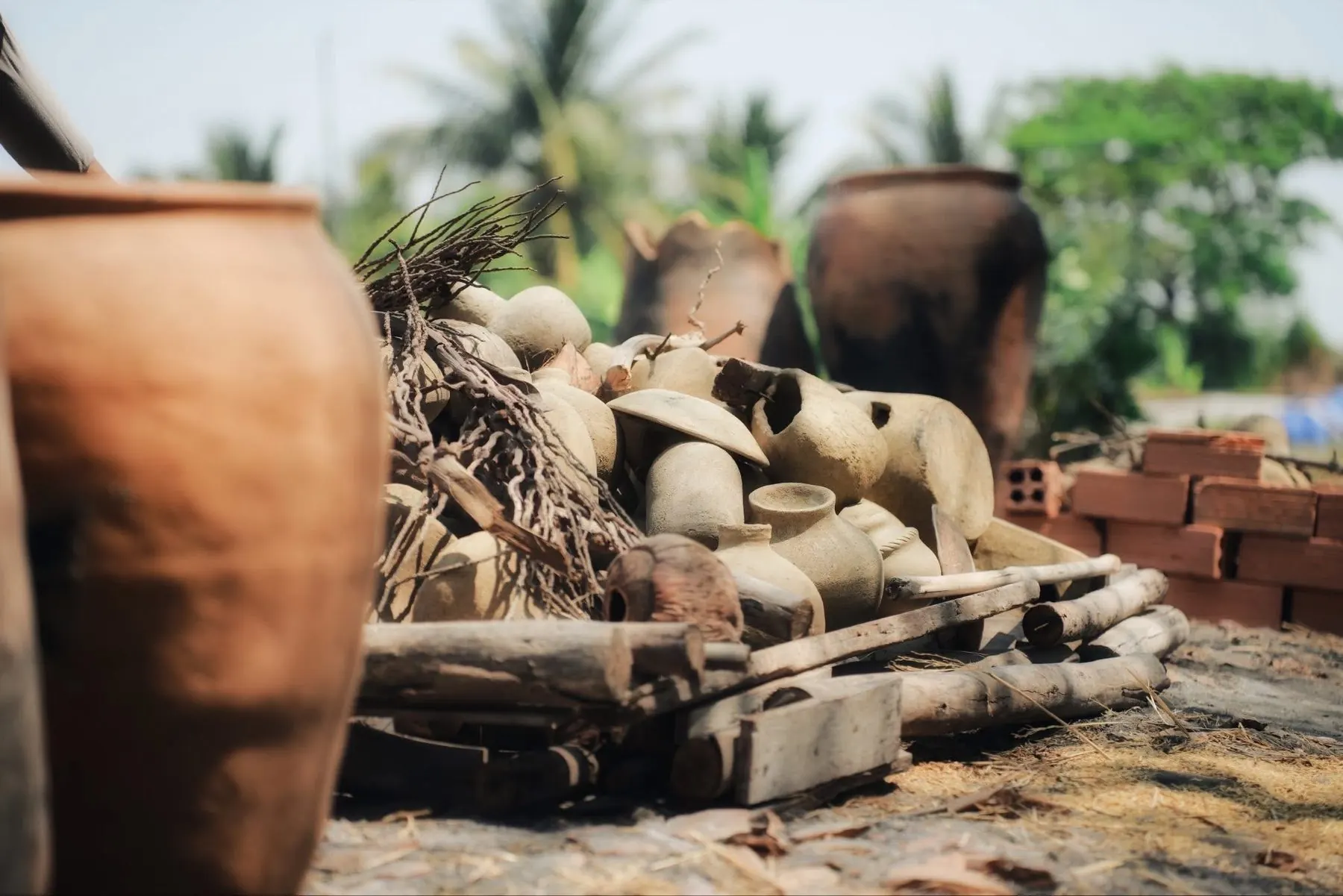
Firing in the open
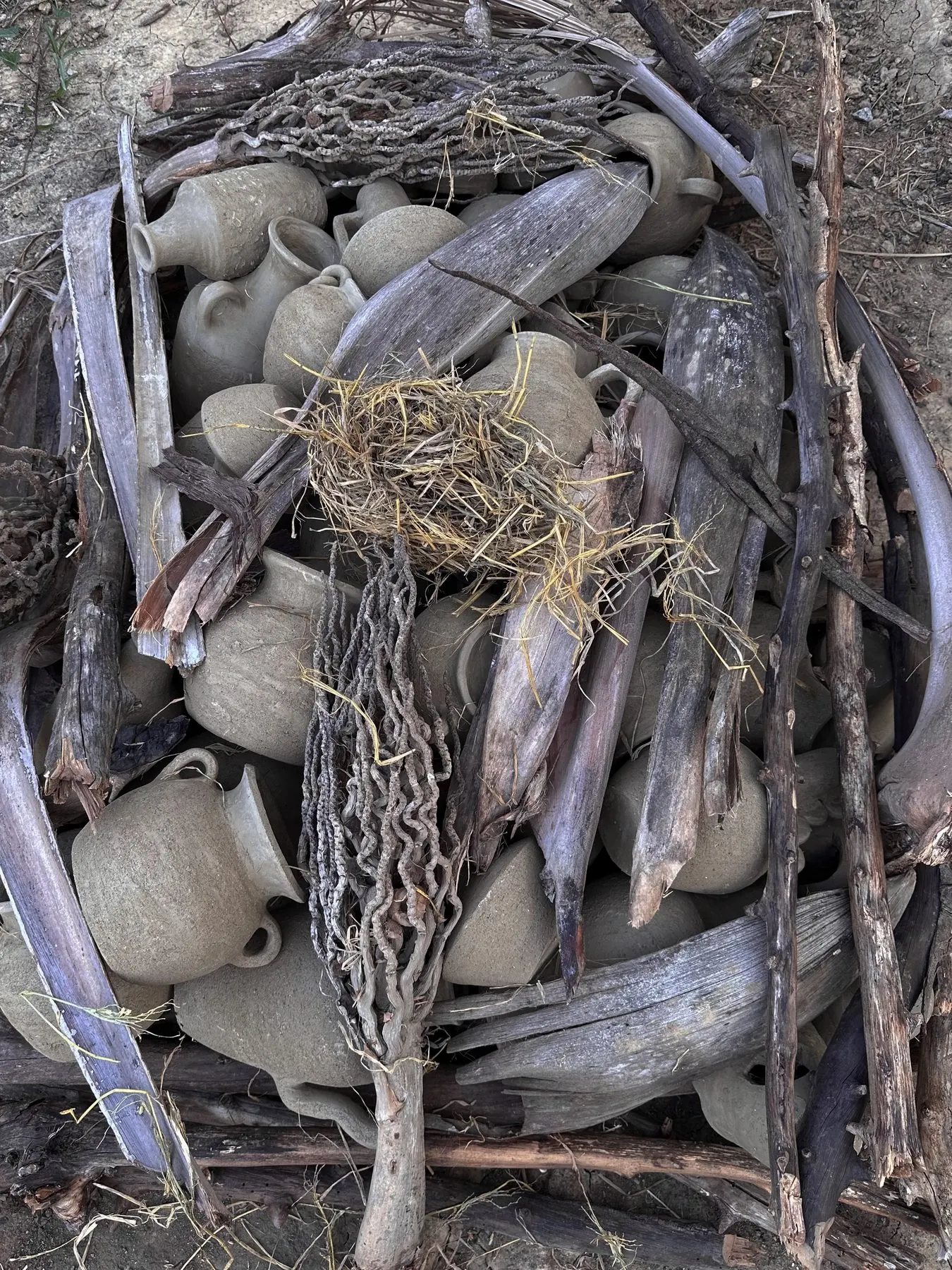
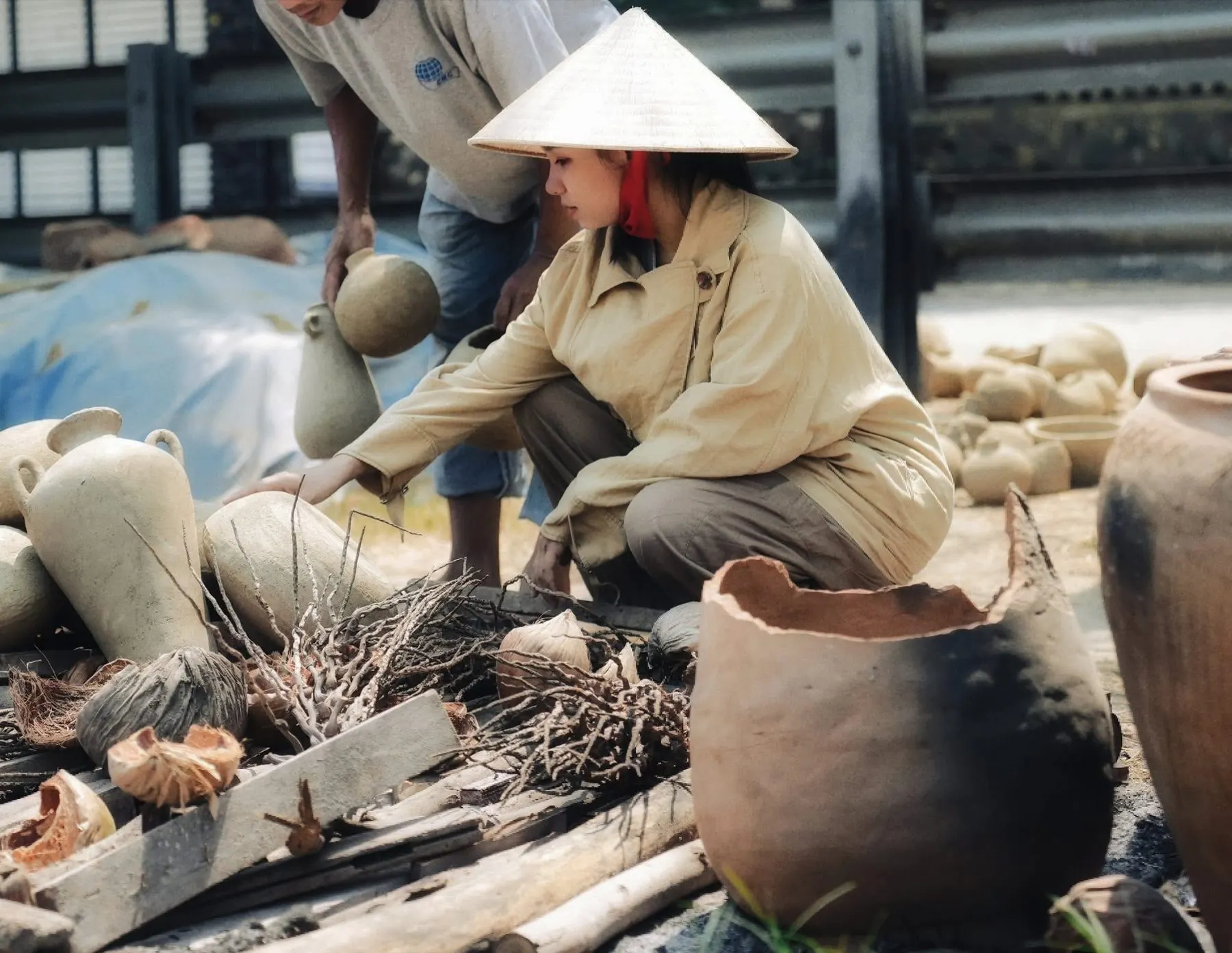
Once dry, the pieces are stacked in the open air and fired with firewood, dry straw and coconut husk. Instead of a thermometer, the potter reads the colour of the flame and the surface of the clay to decide when to stop.
5
Colour from fire
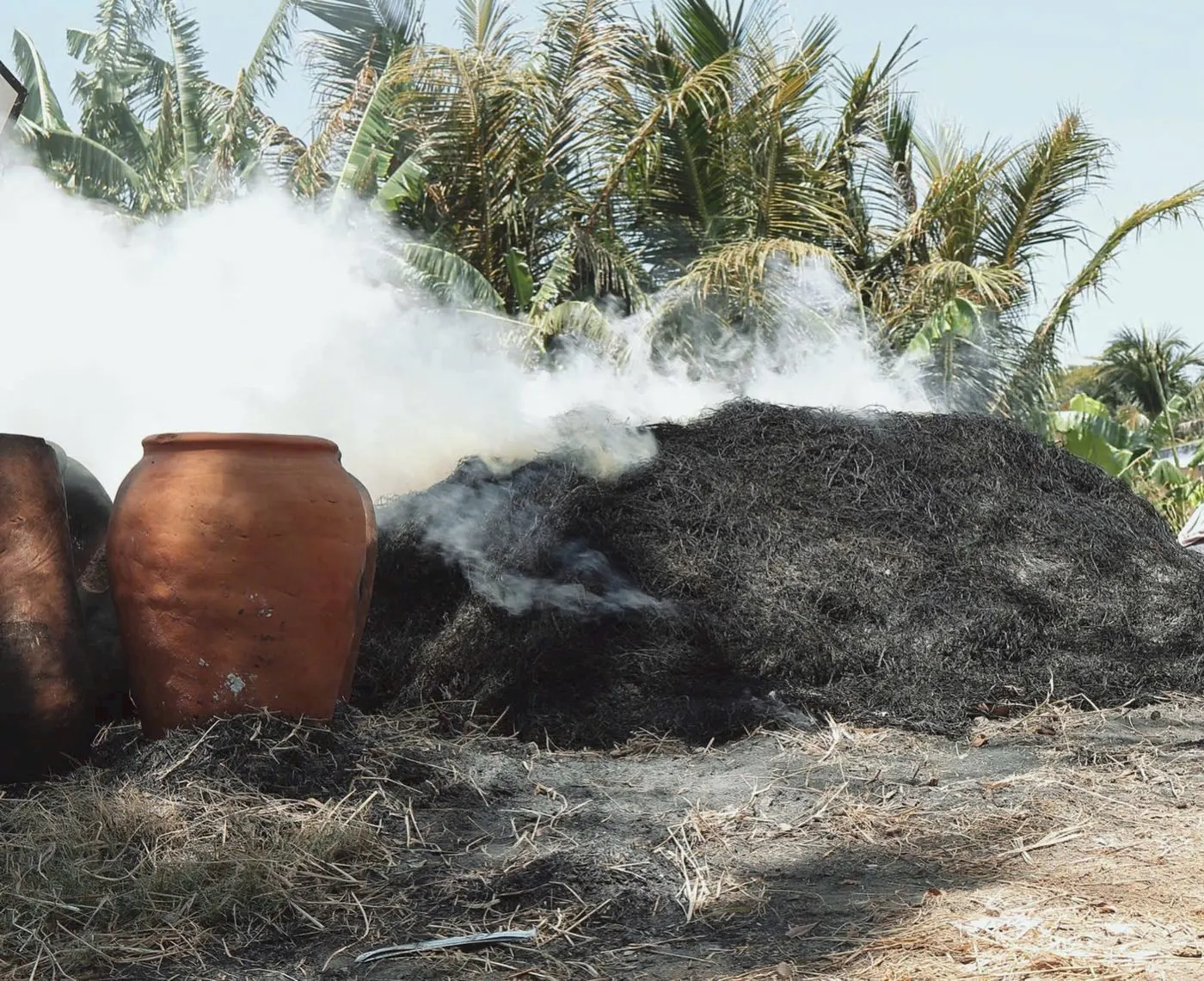
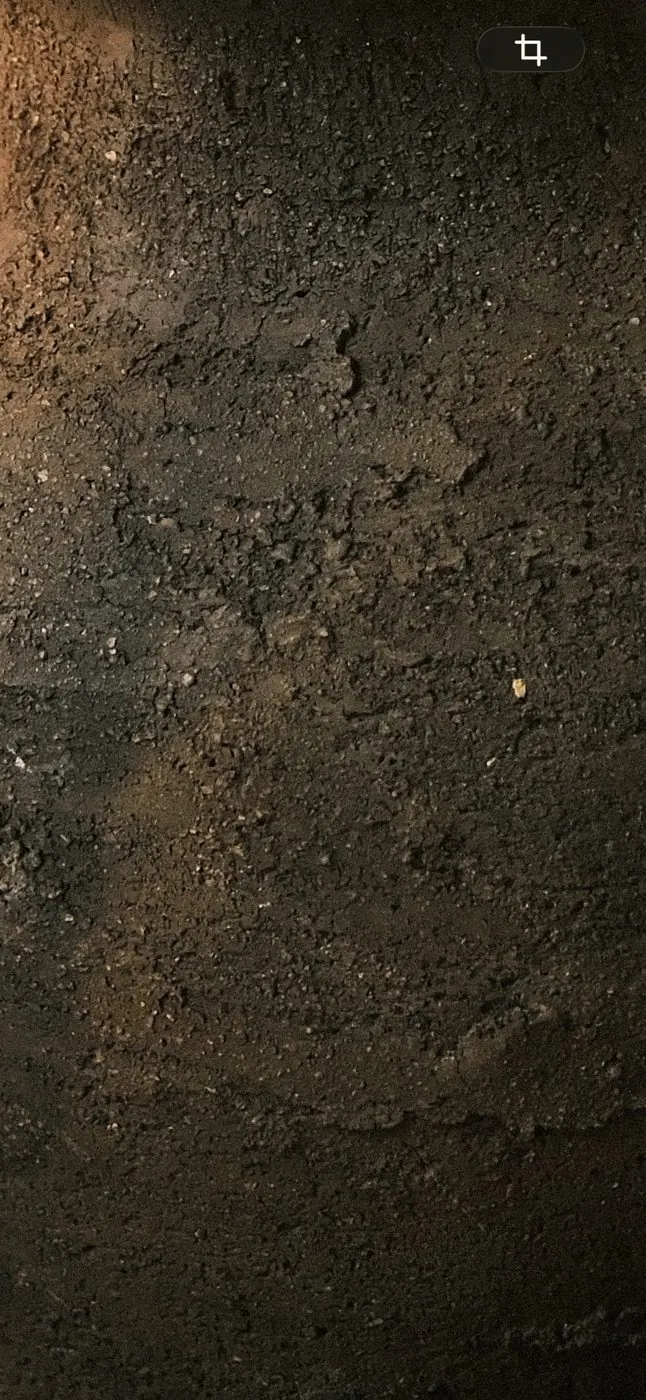
Never sprayed or painted. Smoke and flame mark each surface with shades no one can repeat. For deeper colour and a soft sheen, pieces are buried in rice husk straight from the fire, or sprayed with liquid pressed from cashew-nut shells.
Burying a hot pot in rice husk to deepen its colour
- No glaze.
- No colourant.
- No electric wheel.
Recognised by UNESCO
In 2022 the art of pottery-making of the Chăm people was inscribed on UNESCO's List of Intangible Cultural Heritage in Need of Urgent Safeguarding. Buying from the village keeps the craft alive.
Found a piece you love?
We don't sell online yet. Tell us which piece you love and we'll reply with photos, sizes and a price.
Contact